In today’s rapidly changing and interconnected world, education is expected to provide knowledge but also to support the development of life skills for adaptability and civic responsibility. While formal education remains fundamental, non-formal education plays a critical complementary role in developing the competencies young people and adults need for personal, professional, and social development. Through participatory methods, experiential learning, and community-based activities, non-formal education contributes to the development of EU key competences, improves employability, and promotes active citizenship.
Non-formal education, as part of a Lifelong learning strategy, refers to structured learning that takes place outside traditional classrooms. The strength of non-formal education lies in its methodological diversity, flexibility and learner-centered approach. Methods such as experiential learning, peer education, reflection sessions, and collaborative problem-solving create meaningful learning experiences. Participants are not passive recipients of information but active contributors to the learning process.
This strong educational profile ensures that learning is practical, relevant, and transferable to real-life contexts. Participants not only gain knowledge but also develop attitudes and behaviors that support personal development, professional success, and civic engagement.
Non-formal education strongly supports the EU Key Competences for Lifelong Learning, as defined in the 2018 Council Recommendation. The key competencies provide a common European framework for developing essential skills, like literacy competence, multilingual competence, mathematical competence and competence in science, technology and engineering, digital competence, personal, social and learning to learn competence, citizenship competence, entrepreneurship competence, cultural awareness and expression competence.
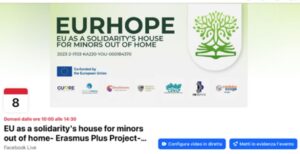
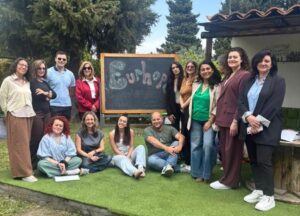
Examples for the role of non-formal education towards the lifelong learning key competences are group projects, like the artistic projects promoted by EURHOPE project, and intercultural exchanges which promote citizenship competence by encouraging dialogue, empathy, and respect for diversity, or problem-solving activities which strengthen entrepreneurship competence, enabling participants to take initiative, manage uncertainty, and develop innovative solutions.
Employability today goes beyond technical knowledge. Employers increasingly seek candidates with soft skills such as teamwork, communication, adaptability, and leadership. Non-formal education is very effective in cultivating these competencies.
Through collaborative tasks, participants learn to work in diverse teams, manage conflicts, and communicate effectively. Leadership opportunities within projects help individuals develop initiative and responsibility.
Non-formal education also promotes entrepreneurial thinking. Participants are encouraged to identify needs, design solutions, and implement projects. These experiences foster creativity, project management skills, and decision-making abilities, all of which enhance professional readiness.
Moreover, non-formal education often connects participants with international networks, increasing intercultural competence and global awareness. Such exposure is particularly valuable in today’s global labor market, where adaptability and cross-cultural communication are essential.
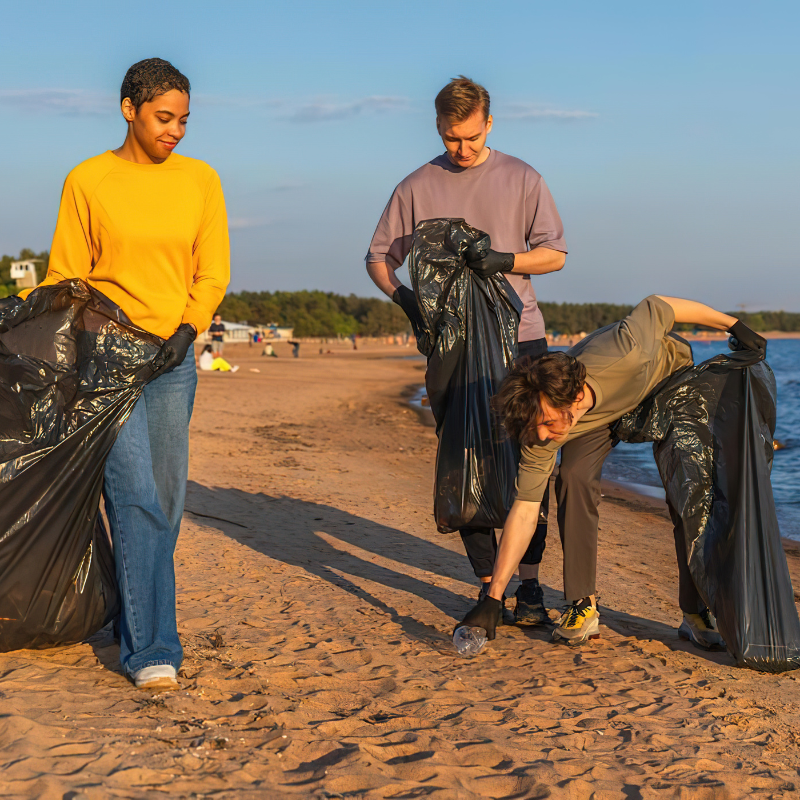
Beyond employability, non-formal education contributes significantly to active citizenship. Through participatory learning, individuals become more aware of social issues, democratic values, and community responsibilities. Activities such as debates or volunteering encourage participants to engage with their local communities, express opinions, challenge assumptions, and develop informed perspectives. This process nurtures responsible and engaged citizens.
Overall, non-formal education empowers individuals to become confident professionals, engaged citizens, and lifelong learners—ready to contribute positively to society and adapt to the evolving demands of the modern world.