In contemporary Europe, the social inclusion of young people from vulnerable backgrounds is not merely a humanitarian gesture but a fundamental prerequisite for ensuring a healthy, democratic, and just society. The marginalization of young people – whether due to their migrant background, socioeconomic conditions, or social displacement – represents a significant loss of potential for any community and for every member state of the European Union. ARSIS – a social non-governmental organization -, has been active since 1992, dedicated to supporting children and young people with a mission to prevent social exclusion, advocate and defend their rights.
With a strong presence in major Greek cities such as Athens, Thessaloniki, Ioannina, Volos, Kozani, and Alexandroupoli, ARSIS works daily to provide equal opportunities to every young person, regardless of their background. Our mission is to prevent social exclusion through direct action and psychosocial support. Our vision is a society where diversity is not a cause for exclusion, but a source of richness and collective progress.
Challenges in the Field: The Reality of Marginalisation
Fieldwork with youth experiencing exclusion reveals a series of complex challenges that require a holistic approach. Inclusion is not a static concept, it is a dynamic process of interaction that involves linguistic, educational, and social integration. The primary obstacles we encounter in the field include:
- Language and Communication Barriers: The inability to communicate effectively is the first barrier preventing access to education, healthcare, and social life.
- Bureaucratic and Legal Difficulties: Problems with legal documents keep young people in a constant state of “invisibility” and uncertainty.
- Cultural Differences and Stereotypes: Prejudices within the local society often hinder acceptance and smooth integration.
- Psychosocial Trauma: Many children carry traumatic experiences from their countries of origin or their journey, which complicate their adjustment.
- Basic Needs Deficiencies: Homelessness and financial insecurity undermine any effort toward a stable and secure future.
ARSIS’s Holistic Intervention Model
For ARSIS, integration is built through specific practices and actions. We do not limit ourselves to providing immediate necessities, but invent in empowering the individual through five key pillars:
- Streetwork and Mobile School
Our approach begins in the young people’s own environment. Specialized Streetwork teams identify children and adolescents working on the street or at risk of exploitation and trafficking. Through the Mobile School methodology, ARSIS reaches out underserved areas, offering educational stimuli to children who often lack access to formal schooling, aiming to motivate and reconnect them with the educational system and social services.
- Education and Skills Development
Education is the most powerful vehicle for change. ARSIS offers non-formal education programs, remedial teaching for all grade levels, and Greek and English language courses. Furthermore, we emphasize future-oriented skills through STEAM, robotics, and technology workshops, preparing youth for the labor market. Our success is reflected in students who gain admission to higher education or manage to communicate with confidence in their new home country.
- Psychosocial Support and Legal Counseling
Every young person is treated as a unique individual. We provide counseling to boost self-esteem, while also supporting families with practical and bureaucratic matters. A significant achievement of our legal support is assisting young people in obtaining Greek Citizenship. For children who grew up in Greece, this legal recognition restores their identity and allows them to dream of a future as equal citizens.
- 4. Accommodation centers for unaccompanied minors
ARSIS operates Accommodation Centers for Unaccompanied Minors providing safe and stable housing for vulnerable young people, within a structured child-protection environment. Through these facilities, ARSIS ensures daily care, individualized case management, psychosocial support, access to education and healthcare services, as well as legal assistance and preparation for independent living. The accommodation model promotes protection, well-being, and social inclusion, supporting young people in developing autonomy and facilitating their smooth transition to adulthood
- Semi-independent living services for young people transitioning to adulthood
ARSIS implements semi-independent living schemes for minors 16-18 years old, supporting their gradual transition to autonomy within a supervised and supportive environment. Through shared apartments and tailored follow-up by specialized staff, young people receive guidance on daily living skills, education and employment pathways, financial management, and access to community services, while strengthening their capacity for independent and socially integrated living
Conclusion: Inclusion as a Collective Goal
ARSIS’s field experience shows that young people with a migrant or vulnerable background are not merely recipients of help, but individuals with dreams, skills, and tremendous potential. Their integration is a multidimensional process that concerns collective progress and social justice.
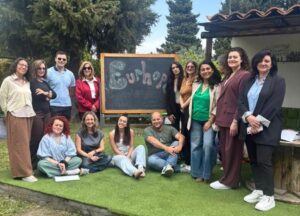
Through the participation in the EURHOPE project, we aim to share these field experiences and strengthen cooperation at the European level. Access to knowledge, empowerment, and interaction with the community can truly change lives. Through joint effort, we can shape an inclusive future where every child has the opportunity to be educated, to create, and to grow as an active citizen